Colombia Destinations

Colombia: A Colorful Jewel of History, Nature, and Culture

Colombia is a fascinating country where Indigenous, colonial, and Afro-Caribbean heritage intersect. Long marked by conflict, the country has today become one of the most sought-after destinations for travelers in search of diversity, authenticity, and breathtaking landscapes.

We will explore the country through two main sections: Heritage and Culture, and Nature and Discoveries, each divided into smaller parts and sub-sections.

Heritage and Culture of the Country

History and Origins

Colombia has been inhabited for more than 20,000 years. Before the arrival of Europeans, Indigenous civilizations, particularly the Chibchas, dominated the central region of the country. Their legacy is still reflected today in craftsmanship, legends, and local traditions.

Spanish Colonization

With the arrival of the Spanish in the 16th century, the country entered a colonial era marked by the founding of Bogotá in 1538 and the intensive exploitation of resources. The territory was named “New Granada,” while Indigenous populations suffered heavy losses.

Toward Independence and Beyond

In the 19th century, the country entered a decisive period in its history by rebelling against Spanish rule. After years of struggle, it gained independence in 1819, joining the South American liberation movement. Although later marked by internal conflicts and political upheaval, Colombia has preserved remarkable historical heritage, especially in its splendid colonial cities such as Cartagena, a jewel of the Caribbean.

Cultural Identity and Diversity of Colombia

An Ethnic Mosaic

The country is a land of diversity: 49% mestizo, 20% white, 14% mulatto, 4% Black, 3% zambo, and 2% Indigenous. This plurality is reflected in the different regions, from the Andes to the Amazon, giving Colombian society an incredible richness.

Religions and Traditions

Predominantly Catholic (93%), Colombia remains marked by a unique religious syncretism, blending Christian beliefs with Indigenous practices. Religious festivals, often spectacular, punctuate the national calendar and testify to this fervor.

Languages and Cultural Expressions

Spanish, the country’s official language, is spoken by more than 95% of the population, but Colombia also preserves around thirty Indigenous languages, mainly within Amazonian communities. The country stands out for its musical richness, blending salsa, cumbia, and vallenato, which resonate through its lively streets. Its growing film industry and vibrant street art reflect remarkable creativity and cultural energy.

Nature and Discoveries in Colombia

The Country’s Must-See Major Cities

Medellín, the City of Eternal Spring

Medellín, once marked by violence, is now a model of urban and social innovation in Colombia. With its constant spring-like climate of 24°C, beautiful flower gardens, impressive cable car network connecting hillside neighborhoods to economic centers, and lively cultural festivals, the city attracts travelers seeking authenticity. Medellín has become an essential stop to discover the dynamism and rebirth of the modern country.

Cali, Capital of Salsa

Cali, in western Colombia, is renowned as the world capital of salsa. Its nights pulse with the rhythm of clubs, dance schools, and colorful festivals. This electrifying atmosphere appeals to travelers seeking adventure and unforgettable celebrations, reminiscent of the warm and festive vibe of destinations such as Cuba or Antigua.

Cartagena de Indias, a Colonial Jewel

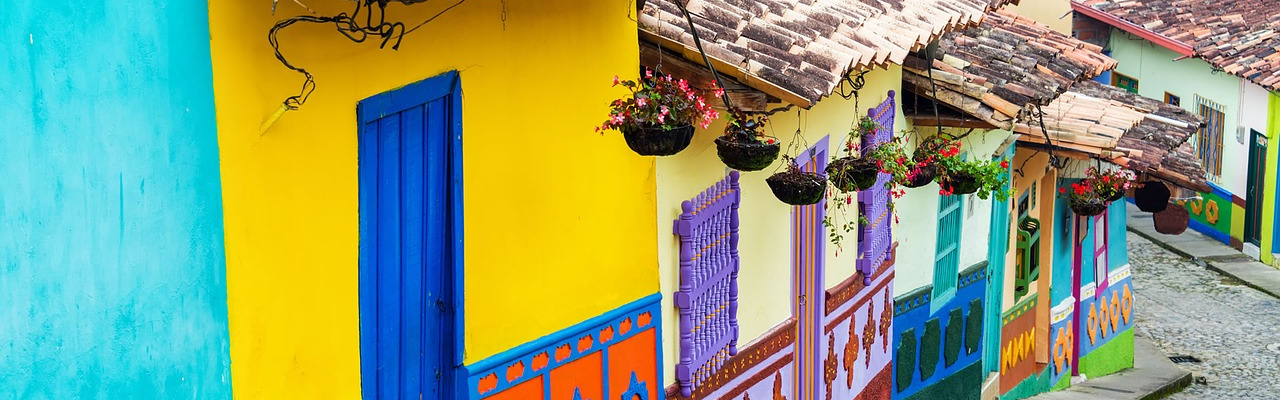
Cartagena, a jewel of the Caribbean coast, enchants visitors with its cobblestone streets, historic ramparts, and brightly colored houses. Its romantic atmosphere—filled with music, sunsets, and local cuisine—makes it a highly sought-after destination. Its private beaches offer an idyllic setting for relaxation, while its rich colonial past fascinates visitors. Cartagena is a must for a vacation in Colombia defined by elegance and charm.

Natural Treasures and Activities

The Coffee Region

The country’s green heart, the Eje Cafetero, is famous for its coffee plantations, picturesque villages such as Salento, and rolling landscapes. Here, travelers can visit fincas, taste some of the world’s finest coffee, and hike among towering wax palms.

Tayrona National Park

Located along the stunning Caribbean coast, Tayrona National Park is a true sanctuary where lush jungle meets idyllic private beaches. Its shaded trails wind through preserved nature, home to monkeys, iguanas, and exotic birds. A genuine natural jewel of Colombia, it promises an unforgettable experience for nature and adventure lovers.

The Colombian Amazon

The Amazon, in the south of the country, offers total immersion in one of the world’s largest tropical rainforests. From Leticia, visitors embark on expeditions to discover pink river dolphins, howler monkeys, and Indigenous villages—a true off-the-beaten-path journey.

Gastronomy, Safety, and Practical Tips in Colombia

The Flavors of the Country

Colombian cuisine is a true reflection of the country’s cultural diversity. Regional specialties include arepas, ajiaco, bandeja paisa, and Caribbean-style ceviche. Tropical fruits are omnipresent. And above all, a visit to this wonderful country would not be complete without tasting its world-renowned coffee.

Safety and Travel Preparation

The country experienced difficult decades, but the situation has improved considerably. Major tourist destinations are now safe, provided a few precautions are taken: avoid remote areas without a guide, use official taxis, and remain vigilant in large cities. Colombia is increasingly opening up to international tourism, attracting travelers eager to discover its hidden treasures. As with a vacation in Cuba or Antigua, it is recommended to plan your trip carefully to fully enjoy this destination.

Why Choose Colombia?

Colombia is a condensed version of Latin America, where each region offers a unique facet: Caribbean private beaches, Andean mountains, Amazonian forests, colonial villages, bustling cities, and peaceful countryside. Whether you are a fan of relaxation, adventure, culture, or gastronomy, the country promises unforgettable vacations. It combines the exotic appeal of a vacation in Cuba or Antigua with its own distinct identity and rare authenticity.

Colombia

Colombia is what you might call a melting pot. The population is rich and diverse. We find descendants of Spaniards, Africans, Amerindians and several crossbreeds between these peoples. The descendants of Africans found there often come from the Caribbean Islands and the Pacific coast. These people of immeasurable cultural wealth have a rich history and must-see sites to make the most of your visit. In 2020, it is in the top 10 in the world ahead of several tourism giants. This is because of the security and confidence it gives travelers, along with great sites to visit, great people to meet, and exciting cultures to experience.

History and Geography

Colombia is a country in the far north of South America. Its territory is dotted with tropical forests and coffee plantations. Its capital is Bogotá. Its history begins 20,000 years ago with various Amerindian civilizations, the most prominent of which is the Chibcha tribe. When Christopher Columbus discovered America, it was she who dominated the center of the country. It was colonized by Spain which gave it the name of New Granada. It was during this period that the present capital Bogotá was established, more precisely in 1538. It was also during this period that many Native Americans were slaughtered. Between political setbacks and popular revolts, Colombia has managed to preserve its cultural beauty and the warmth of its welcome.

Culture

On the denominational level, Colombia is made up of 93% of Catholics and the rest is divided between Protestants and other communities. It should also be noted that traditional religion is still present through a kind of religious syncretism. Its official language is Spanish spoken by more than 95% of the population. The majority of the population is Métis which is a considerable wealth. It is made up of 20% Caucasians, 14% Mulatos, 4% Blacks, 3% Zambos and 2% Indians. For the latter people, there are a few isolated small groups who do not even speak Spanish and live in autarky. This ethnic diversity is more localized in the Amazon rainforest.

The unavoidable

When you are in Colombia, there are places that you certainly do not want to forget to visit before the end of your stay. Among them is Medellin, the city of eternal spring surrounded by mountains, with a stable temperature of 24 degrees throughout the year. It is also called the city of flowers. There is a very friendly and warm atmosphere. It is the ideal place for those who want to have fun and let off steam through the many festivals and other cultural events. We also have Cali, the night owl town that never sleeps. It is the hub of salsa, located in western Colombia. If you are a fan of salsa, give it a try. We can also mention the walled city, Cartagena de Indias which is one of the most emblematic cities of Colombia. You will be seduced by its long walls, its colors, its history and its atmosphere.

Frequently Asked Questions

Depending on the destination chosen, the flight time is different; for a flight from Montreal to San Andrés, the direct flight time is approximately 05:30 hrs; and for Cartagena, the direct flight time will be approximately 05: 40h. But these flights are not offered year round, and a longer itinerary must therefore be planned because of a necessary connection with all other airlines and for all other points of entry into Colombia.
In 2019, the population of Colombia was established at more than 51 million inhabitants
The bus is the means of transport in the region the most used in Colombia, as much by the local population as by tourists; to connect different regions, local airlines offer domestic flights.
Some of the most visited cities in Colombia include Cartagena and San Andrés, for all-inclusive stays, then Bogota, Medellin and Cali for exploring the country other than beach breaks.
Caution should always be exercised when traveling in all countries of the world. Before each trip, always consult the Canadian Government site for frequent updates concerning the country to be visited. https://voyage.gc.ca/destinations/colombie
Colombia is a country with multiple temperatures depending on the region; a warmer climate on the Pacific side or the Caribbean Sea (like Cartagena or San Andrés), moderate climate like in Cali or Medellin, colder climate like in Bogota. https://www.colombia.travel/fr/informations-pratiques/climat For the beach lover, in Cartagena or San Andrés, the months of January to April are the best months of the year to get there .
San Andrés in the Caribbean Sea is the destination to choose for the beaches; of the 40 beaches on the island, Spratt Bight is considered the most beautiful for its white sand and crystal clear waters; those of Cocoplum Bay, Rocky Cay, and Playa Charquitos all offer a tropical and unique landscape.
The Colombian Peso (COP) is the common currency in Colombia; the equivalent of $ 1USD for approx. $ 3,600 COP (current average market rate) https://www.colombia.travel/fr/informations-pratiques/gestion-de-largent
Although no vaccine is required to travel to Colombia, the Authorities recommend that you be vaccinated against yellow fever if you have to go to national parks, reserves or certain tourist sites. Vaccines against typhoid, malaria, hepatitis A and B, as well as mosquito repellants are also recommended. Visiting a travel clinic a few weeks before departure is highly recommended accordingly.
In Colombia, there are 33 Colombian departments and each region has its Governor appointed for the majority since January 2016; however, the current President of the country is Ivan Duque elected in 2018.
As in all tropical, hot and humid regions, there is a presence of mosquitoes in Colombia. If you have to go in the forest, in the Amazon, in national parks, in reserves, or on excursions in full nature, provide an anti-mosquito repellant containing a good concentration of 'Deet' and ask your pharmacist about it. 'use. https://www.pasteur.fr/fr/centre-medical/preparer-son-voyage/colombie
  • #Colombia
  • #South America
  • #Travel to Colombia
  • #Colombian Culture
  • #Bogota
  • #Medellin
  • #Cartagena
  • #Colombian Beaches
  • #Mountains
  • #Amazon
  • #Colombian Coffee
  • #UNESCO World Heritage
  • #Nature
  • #Adventure
  • #History
  • #Colombian Cuisine
  • #Music
  • #Dance
  • #Colombian Art
  • #Barranquilla Carnival